
A Journey to Dye For by Ben Knause
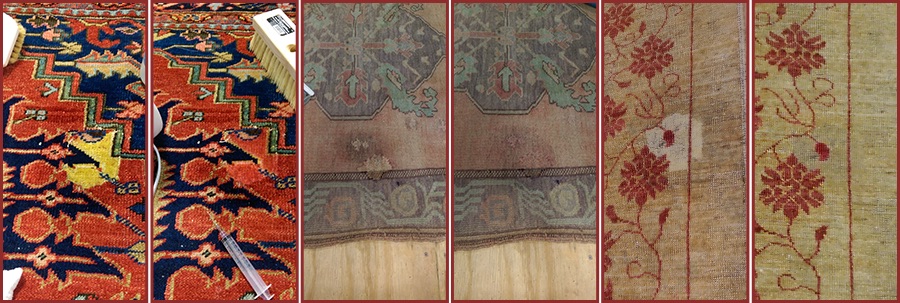 When I returned from the class I was excited to implement my newly acquired knowledge. The first thing I did was acquire some scrap nylon carpet to bleach and re-dye. My first few attempts made it clear that, even with the app, practice would be vital to perfecting the art of color repair. It wasn’t long before I had a few good candidates for spot dying on wool rugs. We were lucky to have a string of rugs come in that had previously been repaired and the color had either faded at a different rate or never matched to begin with or perhaps a little of both. So far the clients have been very happy with the repairs I’ve made.
I have one important tip from a relatively new technician to help you deliver satisfied customers. When setting expectations for the work don’t over promise, which can be said for many areas of rug cleaning, repair, and restoration. There are variables that one can’t control. One thing I’ve learned is, no matter how close the color match may be, if the weave balance or fiber denier of an old repair does not match that of the original rug, the color will not reflect quite the same.
When I returned from the class I was excited to implement my newly acquired knowledge. The first thing I did was acquire some scrap nylon carpet to bleach and re-dye. My first few attempts made it clear that, even with the app, practice would be vital to perfecting the art of color repair. It wasn’t long before I had a few good candidates for spot dying on wool rugs. We were lucky to have a string of rugs come in that had previously been repaired and the color had either faded at a different rate or never matched to begin with or perhaps a little of both. So far the clients have been very happy with the repairs I’ve made.
I have one important tip from a relatively new technician to help you deliver satisfied customers. When setting expectations for the work don’t over promise, which can be said for many areas of rug cleaning, repair, and restoration. There are variables that one can’t control. One thing I’ve learned is, no matter how close the color match may be, if the weave balance or fiber denier of an old repair does not match that of the original rug, the color will not reflect quite the same.
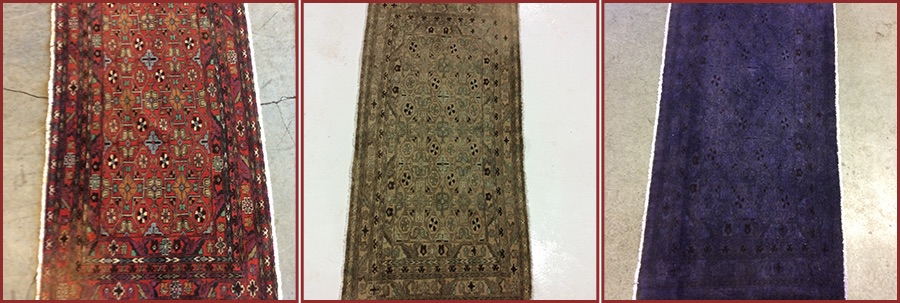 On top of these spot repairs, I recently embarked on my first over-dye project and overall re-color of a faded rug. The over-dye project is a fun learning opportunity. I mentioned in passing to a client that I was about to take a dye class and she offered to let me dye her rug purple for practice. I decided to strip the color first as the rug was pretty dark to begin Once I removed enough color, I mixed some red and blue and voila, she had a purple rug. The initial treatment was a little splotchy in places but with some follow up spotting the color evened out well.
The re-color project will be my first time using the airbrush and liquid dyes to add color back to a rug. The hardest part is getting the depth and shade of color correct. The field is open so I won’t have to spend a lot of time detailing around intricate designs. It’s amazing how much color repair work is out there if you have the confidence to do it.
I still have so much to learn about this niche service but it seems to have great potential. For the sake of comparison, I would like to take some of the other classes offered on color repair and try other dyes in the market. I do believe this is an area that will require practice, practice, practice to become proficient, regardless of how much classroom time you have. Even though I’ve been told they are permanent and colorfast, I’m anxious to see how the dye holds up on the repairs I’ve made. I’ve been told they are resilient but I am naturally skeptical so I need to see it to believe it. I am told the dyes I now use will dye cotton and rayon as well so I will be curious to see how the colors take on such fibers as these are, as I understand, traditionally dyed with fiber reactive dyes in an alkaline solution.
As for the future, I can see the value of having a dedicated color repair department doing repairs in-plant and on-location. I believe it could be another service that distinguishes our company from the rest of the pack and of great value to our customers. If nothing else, it has certainly made me a better rug cleaning and restoration professional.
Heirloom Oriental Rug Cleaning cares for the finest to the most basic rugs from around the world. Please do not hesitate to call us to answer questions and to schedule your next appointment for our rug cleaning and care services.
On top of these spot repairs, I recently embarked on my first over-dye project and overall re-color of a faded rug. The over-dye project is a fun learning opportunity. I mentioned in passing to a client that I was about to take a dye class and she offered to let me dye her rug purple for practice. I decided to strip the color first as the rug was pretty dark to begin Once I removed enough color, I mixed some red and blue and voila, she had a purple rug. The initial treatment was a little splotchy in places but with some follow up spotting the color evened out well.
The re-color project will be my first time using the airbrush and liquid dyes to add color back to a rug. The hardest part is getting the depth and shade of color correct. The field is open so I won’t have to spend a lot of time detailing around intricate designs. It’s amazing how much color repair work is out there if you have the confidence to do it.
I still have so much to learn about this niche service but it seems to have great potential. For the sake of comparison, I would like to take some of the other classes offered on color repair and try other dyes in the market. I do believe this is an area that will require practice, practice, practice to become proficient, regardless of how much classroom time you have. Even though I’ve been told they are permanent and colorfast, I’m anxious to see how the dye holds up on the repairs I’ve made. I’ve been told they are resilient but I am naturally skeptical so I need to see it to believe it. I am told the dyes I now use will dye cotton and rayon as well so I will be curious to see how the colors take on such fibers as these are, as I understand, traditionally dyed with fiber reactive dyes in an alkaline solution.
As for the future, I can see the value of having a dedicated color repair department doing repairs in-plant and on-location. I believe it could be another service that distinguishes our company from the rest of the pack and of great value to our customers. If nothing else, it has certainly made me a better rug cleaning and restoration professional.
Heirloom Oriental Rug Cleaning cares for the finest to the most basic rugs from around the world. Please do not hesitate to call us to answer questions and to schedule your next appointment for our rug cleaning and care services.